



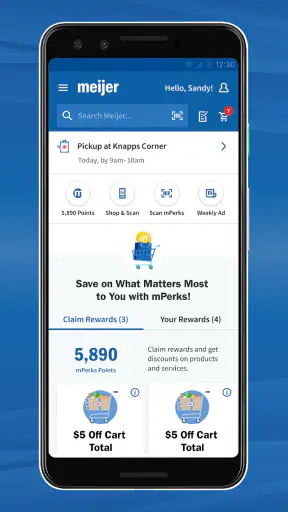

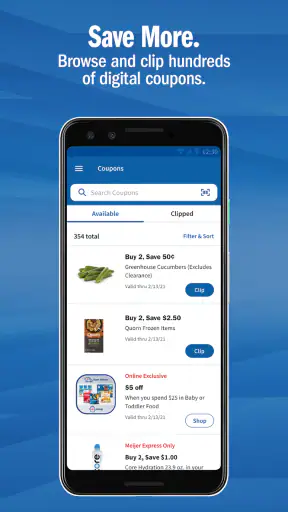
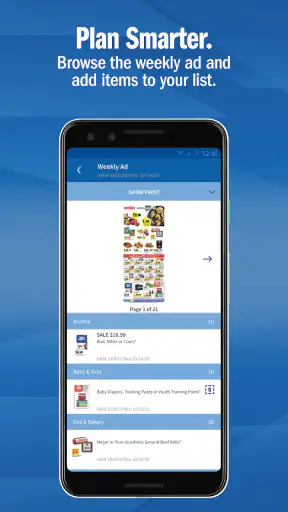
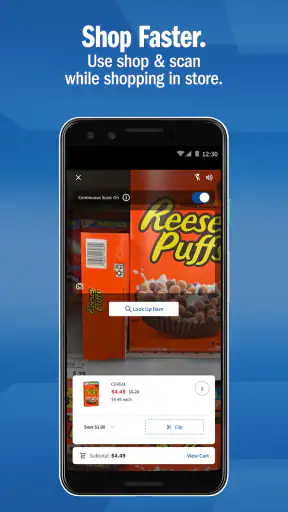
When I need groceries without turning a quick errand into a full trip around the store, Meijer - Delivery & Pickup is the app I would try first if Meijer is part of my regular shopping routine. It is a free shopping app from Meijer, aimed at both delivery and pickup rather than simply acting as a digital brochure. My experience with it is best understood as a complete handoff: I start with a household need, build the order, choose how I want to receive it, and then rely on the store process to finish the job.
That distinction matters. A grocery app can look convenient while still making the actual shopping decision harder, especially when products have several sizes, brands, or substitutions. Meijer’s app is useful because it puts the planning stage and the fulfillment stage in the same place. It is not perfect, and it will not replace every reason to visit a store, but it can reduce the mental load of a planned grocery run when I already know what I want.
From an empty kitchen to a prepared order
The starting condition is usually familiar: I notice that a few essentials are running low, I have limited time, or I simply do not want to walk through the store with a long list. Instead of writing everything down and hoping I remember the right package, I open the app and begin assembling the basket. That makes the first useful question less about browsing and more about intent: am I preparing a full weekly shop, replacing a few household items, or trying to arrange a faster top-up?
For a full shop, I find it easier to think by routine rather than by aisle. I might begin with breakfast items, then move to dinner ingredients, drinks, cleaning supplies, and personal-care products. This approach reduces the chance that I will treat the app like an endless catalog. It also makes a later review more practical because I can ask whether the basket actually covers the coming days instead of judging each item in isolation.
For a small order, search is more valuable than casual browsing. I can look for the exact product I have in mind, compare available versions, and add the closest match without making a separate trip. The trade-off is that digital shelves can encourage overthinking. In a physical store, I can quickly compare packaging; in an app, I may need to open several product entries before I feel confident that I selected the right size or variety.
One habit I recommend is checking the basket as a separate task rather than treating the add button as the end of the decision. I look at quantities, package sizes, and duplicate items before moving forward. This catches the common mistake of adding two small packages when one larger package would suit the household better, or selecting a familiar product when the intended item was a different version.
Building the basket without losing the real-world plan
The strongest use case is planned shopping. If I am ordering ingredients for several meals, I can use the app to create a visible checklist instead of relying on memory. I still keep an eye on the finished basket because the app knows what I selected, not necessarily why I selected it. A tomato product may be technically correct but unsuitable for the recipe I had in mind, and a household-size package may be excessive for someone shopping alone.
This is also where the app differs from a general marketplace. A broad online retailer may offer more unrelated products or make comparison shopping the main attraction. Meijer’s value is more practical: it connects the digital list to a grocery-store fulfillment process. I would choose it when I want food and everyday store items handled together, not when I am hunting across many retailers for the absolute lowest price on one particular product.
Another useful workflow is to build the order in stages. I can add the items I know I need first, pause, and return later to review the basket with a clearer head. That is better than trying to remember every household requirement in one sitting. It also helps separate necessities from impulse additions, although the convenience of browsing can still make it easy to spend more attention—and potentially more money—than planned.
Before I commit, I think about freshness and flexibility. Some products are easy to order because the exact package matters less, while others are personal choices. If I am particular about produce, bakery items, or a specific brand, delivery or pickup may involve more compromise than walking through the store myself. The app can organize the request, but it cannot remove the difference between choosing an item with my own hands and accepting what is selected during fulfillment.
Choosing delivery or pickup for the actual day
The handoff begins when I choose how the order should reach me. Delivery makes sense when I am at home, carrying groceries would be inconvenient, or the value of avoiding a store visit is greater than the extra waiting and coordination. Pickup is usually the better fit when I will already be near the store, want a more predictable collection routine, or do not want to wait for a driver.
I treat these options as different workflows, not two labels for the same service. With pickup, my responsibility is to arrive at the right stage of the process and make sure I have enough room for the order. With delivery, my responsibility shifts to being available at the chosen time and checking the bags when they arrive. That small change in responsibility is easy to overlook when placing the order from a sofa.
The app is free to install and is suitable for an Everyone audience, which makes it approachable for a household where more than one person might help with shopping. The purchase itself is a separate consideration from the app’s download cost, so I would still review the order total and any applicable fulfillment details before confirming. Convenience is only useful if the final arrangement fits the budget and schedule.
For a busy weekday, I would place the order before the last minute. That gives me time to reconsider the basket and deal with any product issue without turning dinner planning into an emergency. For a weekend shop, pickup may be easier if I am already making a store-area trip. For someone without reliable transportation, delivery may be the more meaningful feature because it changes access, not merely comfort.
What happens between the screen and the bags
The most important handoff is the one customers do not perform themselves: the move from my digital basket to the store’s physical picking process. I see the order as a request, while the store has to locate the items, handle availability, prepare the bags, and pass them to me or a delivery process. That is why I avoid treating the product list as a guarantee that every item will appear exactly as imagined.
This is the point where careful ordering pays off. If an item is central to a meal, I avoid building the entire plan around one fragile choice. I may add a practical alternative to the basket or plan a substitute ingredient in my head. That is not a criticism unique to Meijer; it is a basic trade-off of ordering groceries remotely. The app saves me a trip, but I give up some direct control over selection.
For pickup, I would inspect the order before driving away if the process allows a convenient opportunity to do so. I check that the main categories are present, that chilled or frozen items feel appropriately handled, and that quantities look right. For delivery, I do the same as soon as the bags are at the door. This is a simple but important habit because the handoff is the moment when a digital mistake becomes a household problem.
I also keep the order confirmation and the physical result mentally connected. If something is missing or different, I want to know whether I selected the wrong item, whether the store substituted it, or whether the problem occurred during handoff. That clarity makes it easier to decide what needs fixing instead of assuming the entire order failed.
A realistic weekday example
Imagine I finish work and realize I am short on breakfast food, vegetables, milk, and laundry supplies. I do not need a large shopping adventure; I need a dependable set of items before the next morning. I open the app, search for the essentials, add the household products, and then review the basket by use rather than by the order in which I found everything.
At that point, I check whether I have chosen the right package sizes and whether the basket contains anything accidental. I then decide between pickup and delivery based on the evening’s route. If I am already passing the store, pickup avoids waiting at home. If I am tired, without transport, or responsible for someone who cannot come along, delivery may be worth the added coordination.
When the order is ready or arrives, I compare the bags with the plan. If everything important is there, the app has done its job: it has moved me from a vague shortage to a usable household supply without requiring a conventional shopping trip. If a key item is unavailable, the outcome depends on whether I had a backup plan. That is why my best results come from using the app as a planning tool, not just as a fast button for repeating familiar purchases.
Where the experience is genuinely helpful
The app is particularly useful for people who already shop at Meijer and want one place to prepare an order. Its audience includes parents managing a long list, commuters trying to avoid a second trip, older shoppers who find a store visit tiring, and anyone who prefers to make purchasing decisions from home. It can also help a household divide responsibility: one person can assemble the list while another handles the pickup or receives the delivery.
Its scale suggests that it is not a niche experiment. Meijer has more than five million installs, with an average rating of 3.8 from roughly seventy-eight thousand ratings and about twenty-nine thousand written reviews. I read that combination as a balanced signal: many people find the app useful, but the experience is not uniformly smooth for everyone. The rating is high enough to support trying it, not high enough to ignore the possibility of friction.
The app has been available since January 8, 2013, and the current version is 10.71.0. It supports Android 7.0 and later, which is helpful for people using older compatible phones rather than replacing a device just to manage groceries. The long presence in the category is reassuring, although longevity alone does not guarantee that every screen or workflow will feel equally polished.
One less obvious strength is that it can make shopping decisions visible before I leave the house. That helps me notice an unrealistic meal plan, an oversized basket, or a missing household staple while changes are still easy. A store visit often hides those problems until I am already tired or distracted. The app does not make me a better planner automatically, but it gives me a better place to review the plan.
Where I would choose another approach
I would skip this app if I do not shop at Meijer regularly or if the nearest store is inconvenient for my normal routine. A grocery tool is only as useful as the fulfillment network behind it. If I would need a long drive for pickup, the time saved during ordering may disappear during collection. In that situation, a nearby supermarket’s own service could be the more sensible choice.
I would also prefer a traditional store visit when product inspection is central to the purchase. Fresh produce, cuts of meat, bakery choices, and items where appearance matters can be difficult to delegate. The app is better for repeatable, clearly specified goods than for shopping that depends on touch, size, ripeness, or personal judgment.
Compared with a general delivery marketplace, the Meijer app is more focused on the Meijer relationship. That can be an advantage because the experience is tied to one retailer and one shopping routine. It is a disadvantage if I want to compare several stores in one place, combine orders from different merchants, or search for a rare product outside Meijer’s range. I would choose the broader marketplace for comparison and Meijer’s app for a straightforward store-specific order.
I would also avoid relying on it for an urgent, highly exact meal unless I had enough flexibility to handle an unavailable item. Remote grocery fulfillment always introduces a gap between what I request and what can be prepared. The app reduces the trip, but it cannot promise that every shelf will cooperate at the exact moment my order is assembled.
Small habits that make the workflow better
My first tip is to separate “must have” items from “nice to have” items during the basket review. If a substitution or availability problem occurs, I know which part of the order affects the next meal and which part can wait. This is more useful than simply creating a large basket and assuming the store will resolve every detail for me.
My second tip is to use pickup when I already have a reliable route and delivery when the route itself is the problem. Choosing delivery just because it sounds easier can create a timing obligation at home. Choosing pickup just because it may feel more predictable can be a poor decision if getting to the store is difficult. The best option depends on the handoff, not on the shopping screen.
My third tip is to review the basket once as a shopper and once as the person who will put everything away. The first review checks whether the correct products are present. The second asks whether the quantities, package sizes, and categories make sense in the kitchen, pantry, refrigerator, or laundry area. That second perspective catches practical errors that a simple item-by-item check can miss.
My fourth tip is to keep a backup meal in mind whenever the order includes ingredients that are difficult to replace. This is especially important when I am ordering close to mealtime. A simple alternative does not defeat the purpose of the app; it protects the result from the one unavailable item that could otherwise undermine the whole plan.
My recommendation after using the complete process
I see Meijer - Delivery & Pickup as a useful store companion rather than a universal answer to grocery shopping. The best experience comes from a clear list, sensible expectations, and a deliberate choice between delivery and pickup. When those pieces line up, I can move from “I need groceries” to a completed household task with less travel and less wandering.
The limitations are equally clear. I still need to check the basket, think about substitutions, coordinate the handoff, and inspect the result. People who want to browse fresh products personally, compare many retailers, or avoid any uncertainty around availability may be happier shopping in person or using a broader comparison service.
For existing Meijer customers, I think the app is worth trying because it is free, familiar in purpose, and built around a realistic grocery workflow. I would recommend it most strongly for planned weekly orders and repeat household essentials, not as a replacement for every spontaneous store visit. Its real advantage is reducing the distance between a shopping list and a finished errand, while still leaving me responsible for the decisions that matter.


